Tools that extend vision
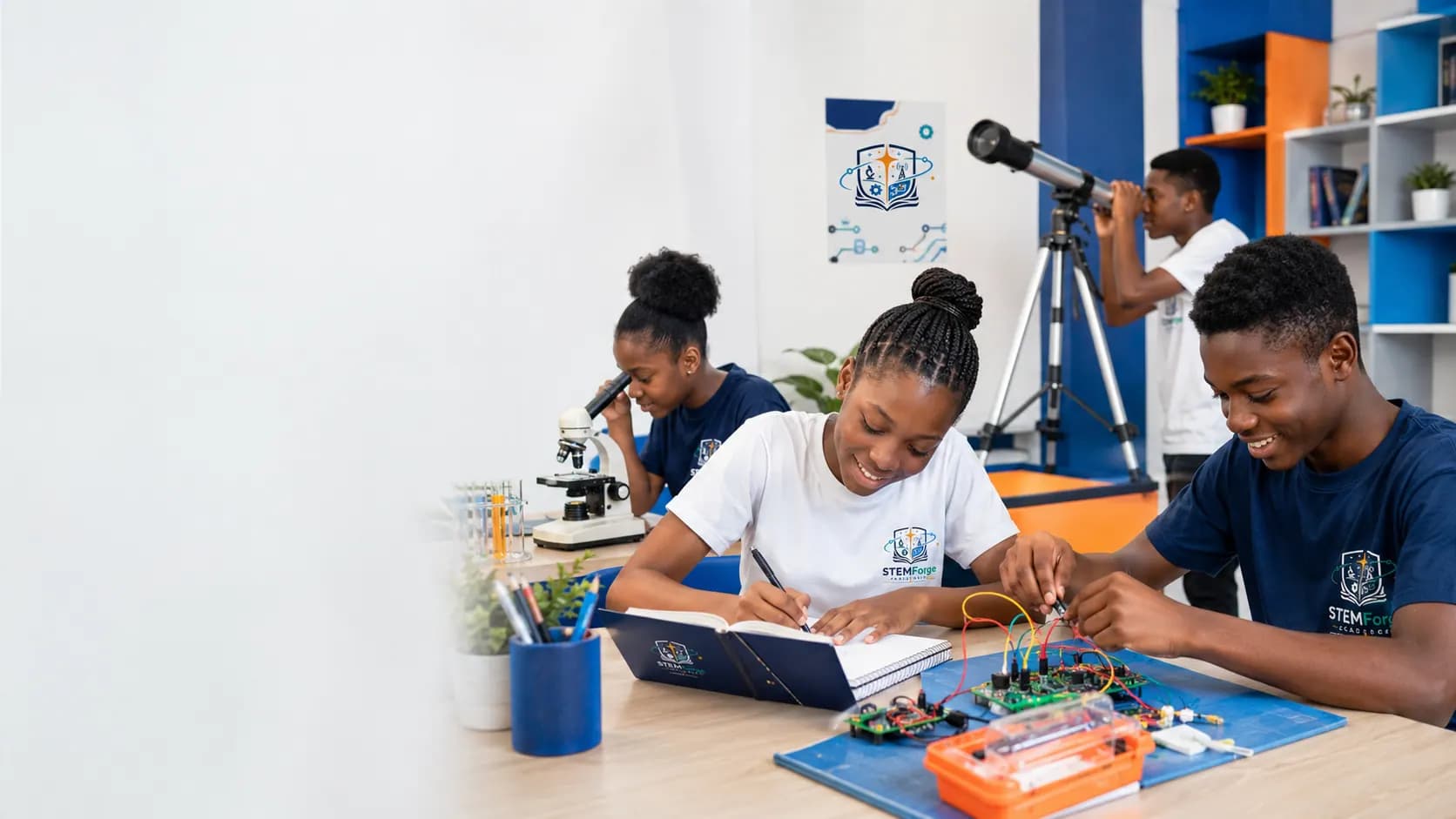
Microscopes, lenses, binoculars, and telescopes help learners see the very small and the very far.

STEMForge Academy
Hands-on STEM programs where young learners explore radio, circuits, coding, microscopes, optics, astronomy, and nature-inspired design through guided projects and real tools.
Hosted at the Eastern Regional Library, Koforidua. Limited places available.
Upcoming
A limited 6-week program for young learners in and around Koforidua.
What Students Will Experience
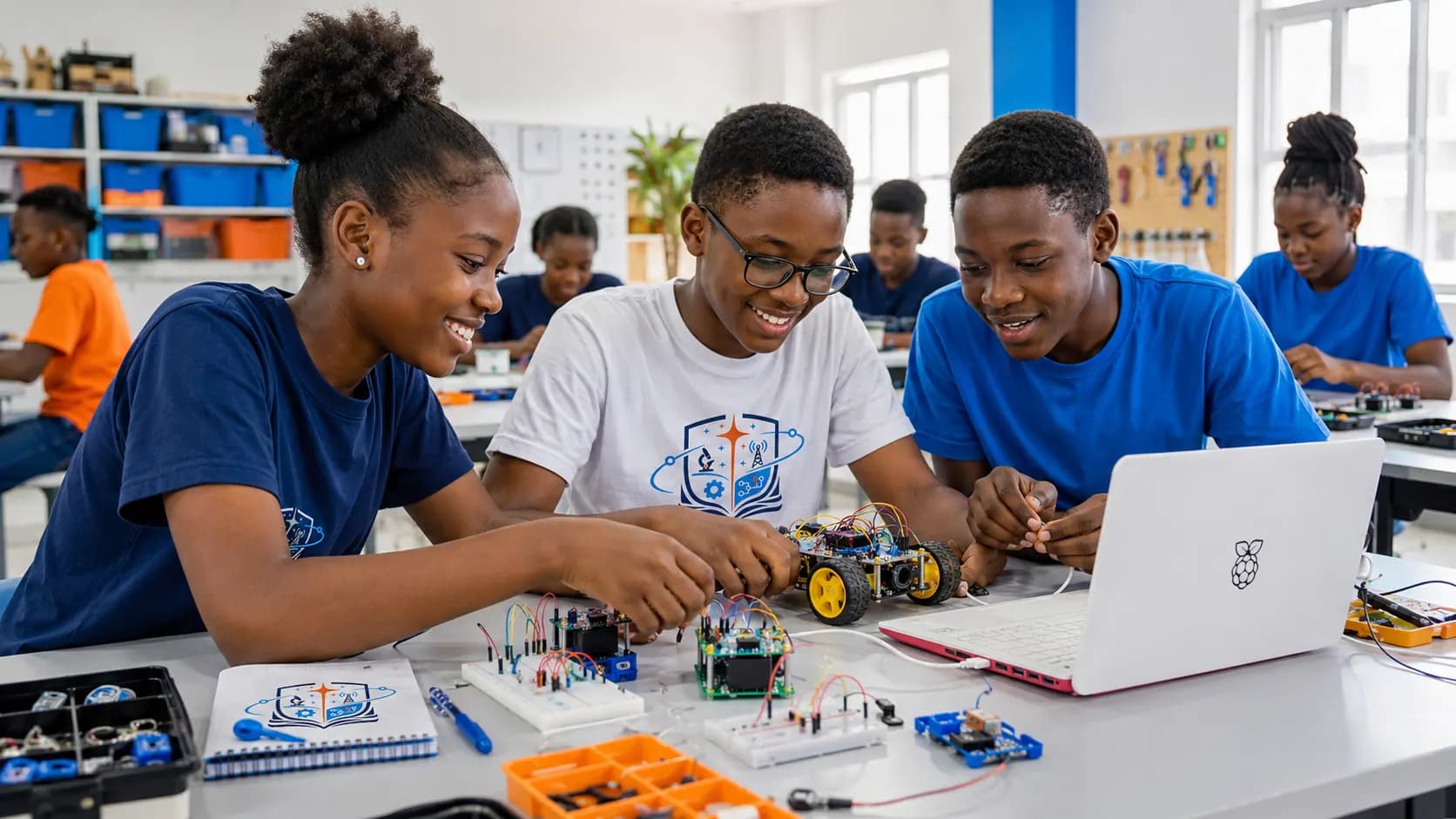
Learners move through practical STEM moments: observing closely, building carefully, testing ideas, using real tools, and explaining what they discover.

Why STEMForge Matters
We invite learners into focused activity: tools, teamwork, observation, building, and confident explanation.
Focused sessions turn curiosity into making, testing, teamwork, and disciplined practice.
Learners ask what they observed, what they can measure, and how they can test it.
Confidence grows when students handle tools, build systems, and present what they discover.
STEMForge connects knowledge to careers, creativity, service, and invention.
How do we know?
The aim is not memorizing facts. It is learning how to observe, test, and explain clearly.
Program Pathway
A simple growth path: spark curiosity, practise making, then share ideas with confidence.
Learners are introduced to exciting STEM experiences through guided demonstrations, observation, simple activities, and curiosity-building missions.
Focus
Exposure, wonder, confidence.
Learners begin to create, test, improve, and explain. They explore circuits, tools, signals, optics, observation, measurement, and design thinking.
Focus
Hands-on skill, experimentation, problem-solving.
Learners work toward mini-projects, presentations, journal reflections, and a final demo experience.
Focus
Creativity, communication, teamwork, project confidence.
Upcoming Program
A 6-week hands-on STEM experience for young learners, running July 28 - September 5, 2026 at the Eastern Regional Library, Koforidua.
What Learners Get

Innovation Challenge
Young learners solving real problems in Ghanaian communities.
Community Innovation Challenge
The Challenge Series invites learners to observe everyday problems in Ghanaian communities, define them clearly, and propose solutions that could be tested, improved, and possibly prototyped.
What Makes STEMForge Different?
STEMForge is built for learners who should not only consume technology, but understand, question, build, and explain it.
Core Principle
Wonder is the beginning. Evidence is the discipline. Creativity is the expression. Building is the proof.
Learners are encouraged to understand how things work, not just use tools blindly.
Stories, sketches, journals, presentations, rhythm, design, and science communication help learners express what they discover.
Radio, circuits, lenses, microscopes, telescopes, nature, phones, signals, games, and everyday tools become pathways into deeper understanding.
Keen learners may later continue through opt-in clubs and societies, including radio, mechatronics, skywatching, and coding pathways.
Who can join?
Learners do not need prior STEM experience. They need curiosity, willingness to participate, and openness to learning by doing.
STEMForge Academy provides a structured environment where learners can explore ideas, handle tools responsibly, work with peers, ask questions, and discover new possibilities.
FAQ
A few quick answers for families exploring the program. The full FAQ page covers application, equipment, certificates, and supervision in more detail.
View all FAQsNo. STEMForge Academy is a STEM-focused youth engagement initiative. It organizes practical demonstrations, innovation clubs, camps, competitions, and related youth development activities.
The program is intended for young learners aged 12 and above who are curious about science, technology, building, discovery, and practical learning.
No. The program is designed for beginners and curious learners, aged 12 and above.
Yes, under supervision. Activities may involve radios, basic electronics, lenses, microscopes, telescopes, journals, and other learning tools.